Quitting Is a Skill… You're Terrible at It
The Failure Lab Series | Mindset
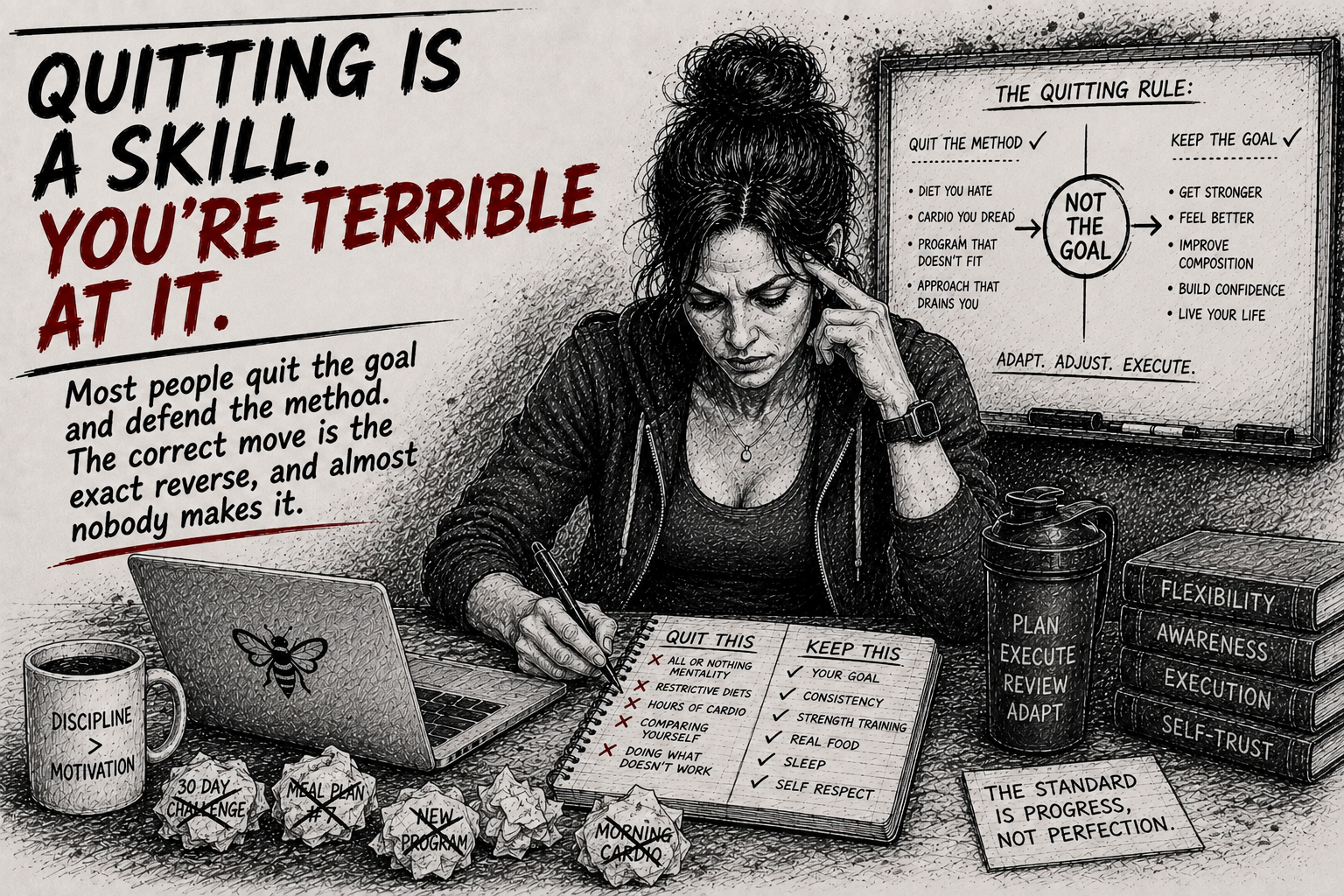
Most people quit the goal and defend the method. The correct move is the exact reverse, and almost nobody makes it.
You know the person. Maybe you are the person.
Nine years in a job they stopped liking in year three. A degree finished for no reason except that it was half finished. A business kept alive by refinancing. A relationship that ended emotionally in 2022 and administratively never.
Ask why they stay and you get the same sentence in different clothes. I have already put so much into this.
That sentence has a name and a 41-year-old research paper behind it.
The theater ticket experiment
In 1985, Hal Arkes and Catherine Blumer published a study in Organizational Behavior and Human Decision Processes. They arranged for the Ohio University Theater to sell season tickets at three prices, assigned at random as people reached the booth. About a third paid the full $15. About a third paid $13. About a third paid $8.
Same seats. Same plays. Same season.
Over the next six months, the people who paid $15 attended more performances than the people who got a discount.
Nothing about the future differed. The only variable was money already spent and gone. It still drove behavior, and it drove it in the direction of showing up on nights nobody wanted to go out.
That is the sunk cost effect. Arkes and Blumer traced the motivation to a specific fear, which was not looking wasteful.
You are running that same program on decisions worth considerably more than $15.
Quit the method, keep the goal
Here is where most people invert the correct decision.
Say you want to get strong. You pick a program. Four months later you are not stronger, your elbow hurts, and you dread every session.
What people do: abandon the goal. Decide they are not a gym person. Tell themselves they tried.
What they should do: abandon the program. Keep the goal. Get a coach, change the plan, and keep the destination fixed.
The same inversion runs through careers. Someone hates their job, so they conclude they hate the industry, and they leave the field entirely rather than leave the manager. They quit the goal, which took ten years to build, and protect the method, which took two weeks to choose.
Write it down as two separate lines. What am I trying to get. How am I currently trying to get it. Then ask which line is failing. In my experience, it is almost always the second line, and almost always the first one gets executed.
Write the kill criteria before you start
The reason quitting feels like a character verdict is that you make the decision while you are inside the failure, tired and embarrassed and surrounded by everything you already spent.
That is the worst possible moment to evaluate anything.
So decide in advance. Before you begin, write down two things and date them.
A metric. What has to be true for this to be working.
A deadline. When you will check.
Make them specific enough to be uncomfortable. Not "growing the business." Instead: 12 paying clients by March 31. Not "getting stronger." Instead: added 40 pounds to my squat by the end of week 16.
Then when the date arrives, you read your own handwriting instead of arguing with your feelings. If the number is missed, you change the method. If you change the method twice and miss twice, you are permitted to question the goal.
This is the whole skill. Pre-commitment turns quitting from an identity crisis into a scheduled review.
The labor market already figured this out
The median number of years American workers had been with their current employer was 3.9 in January 2024. That was down from 4.1 in 2022 and the lowest reading since January 2002. Twenty-two percent had been in the job a year or less.
People move. The economy assumes it. Your résumé assumes it. HR assumes it.
The only party still treating a four-year job as a lifetime vow is you, alone, at 11 p.m., calculating how much you have invested and whether leaving makes the last four years worthless.
It does not. The four years happened. You keep the skills, the contacts, and the scar tissue no matter what you do next. Staying another year does not retroactively improve them. It just adds a fifth year to the pile you will use as the reason you cannot leave in 2027.
Where this argument gets dangerous
Everything above can be used as permission to bail the first time something gets hard, and that is a different disease with worse outcomes.
Most meaningful things go through a stretch that feels exactly like failure while it is working. Strength training gets boring before it gets impressive. Businesses lose money before they make it. Writing gets worse before it gets better. If you quit every project at the first flat month, you will collect a very long list of things you almost did.
The distinction is direction, not comfort.
Ask whether the underlying numbers are moving, even slowly, and whether you are learning anything you did not know 90 days ago. If yes, you are in the hard middle and you stay. If the numbers are flat, you have learned nothing new in six months, and your main reason for continuing is the amount already spent, that is not persistence.
Discomfort is not evidence of progress. Neither is boredom evidence of failure. You need the metric to tell them apart, which is why you write it down in advance.
The part people miss
Quitting well is not the opposite of commitment. It is the thing that makes commitment affordable.
Every hour you spend maintaining something dead is an hour unavailable for something that would work. That is the actual cost, and it never appears on the ledger you are staring at, because you only count what you already put in.
Count what it is currently costing you instead.
Then set a date, write the number, and go find out.